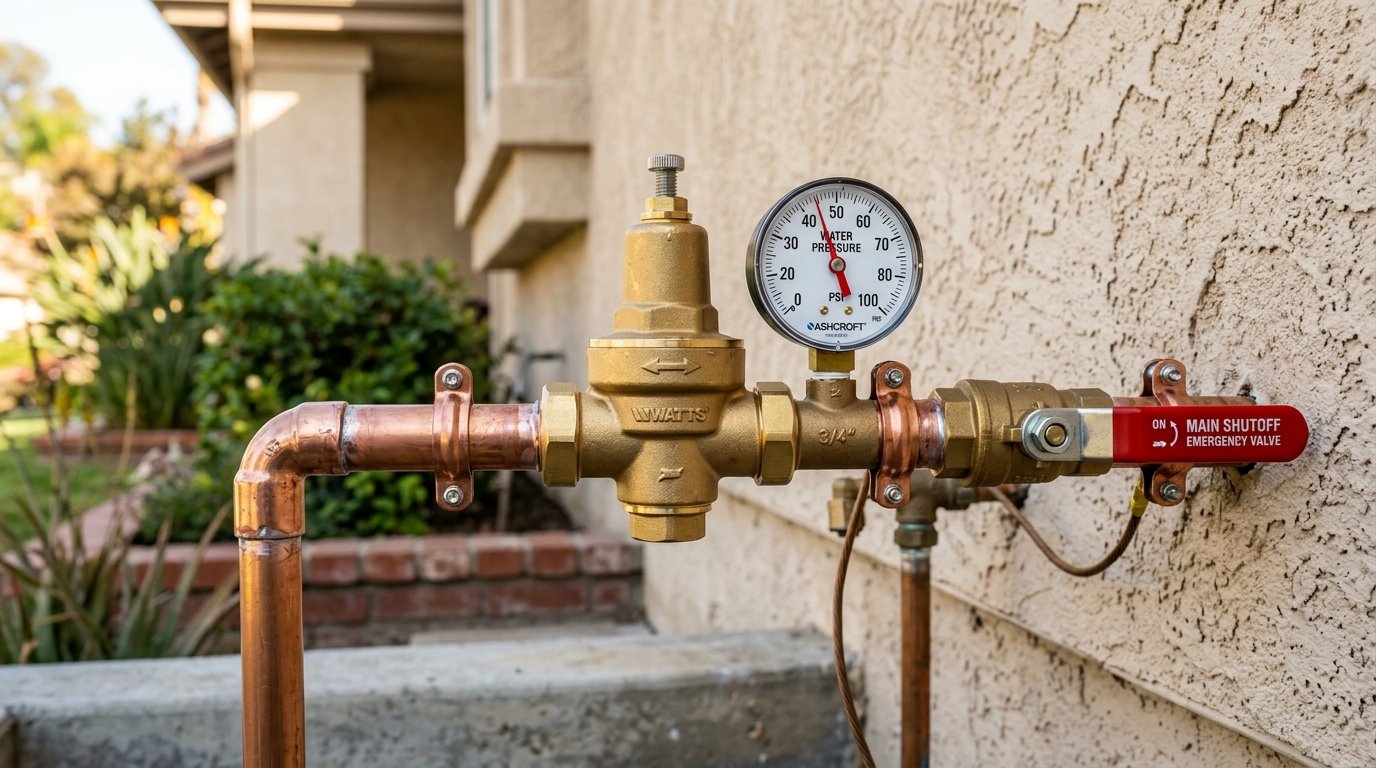
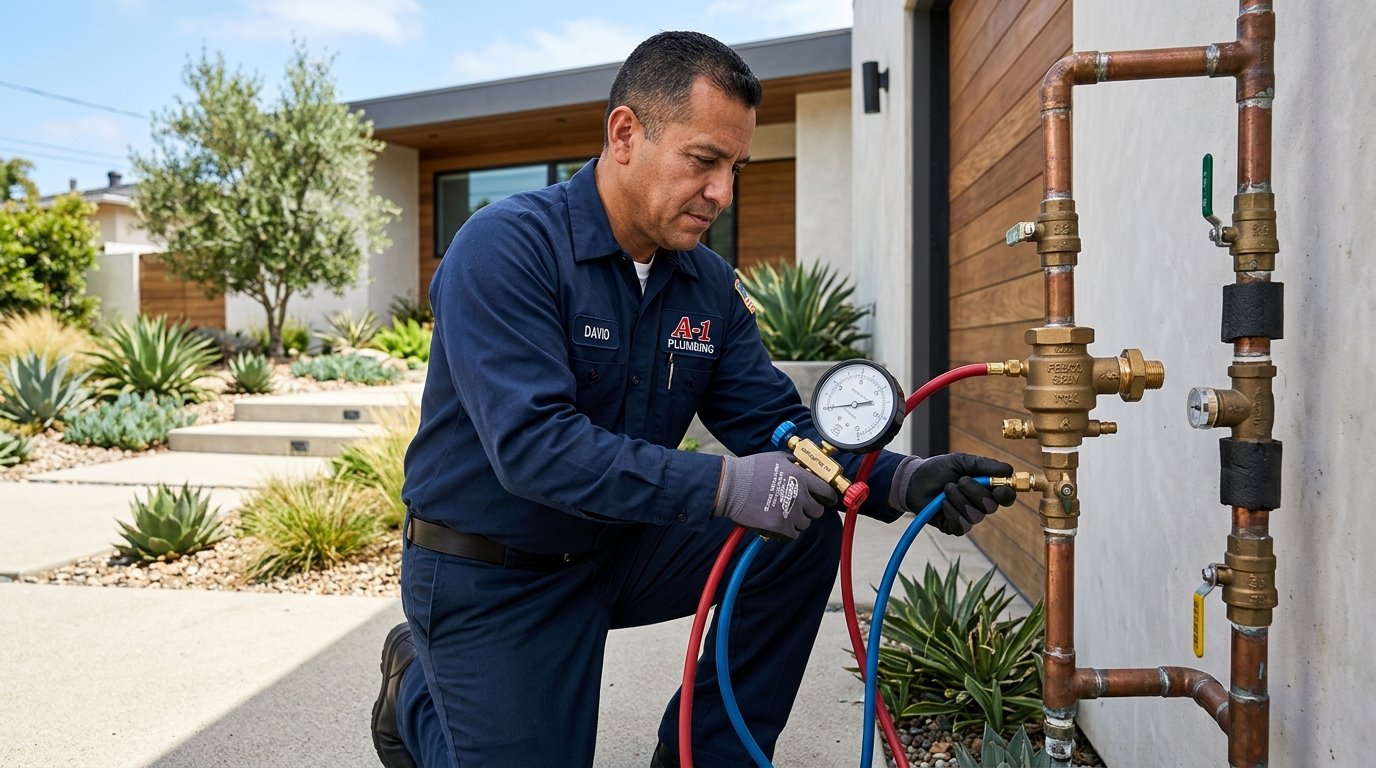
Every year, property owners and commercial facility managers across Los Angeles, Van Nuys, Burbank, and Glendale receive an official compliance notice from the LADWP Cross-Connection Control Program. The notice states that your backflow prevention assembly is due for its mandatory annual certification—and failure to submit a passing digital test certificate within 30 to 45 days can trigger administrative penalties and the immediate disconnection of municipal water service.
This official correspondence often raises immediate questions: What does a backflow preventer actually do? Why does my property require one? How much does certified testing cost? And what happens if the internal check valves fail during the inspection?
In this authoritative guide, the licensed master plumbers at SoCal Plumbing 247 (CSLB CA C-36) break down California Title 17 backflow mandates, itemize transparent 2026 testing and repair costs across Los Angeles County, explain the physics of backsiphonage and backpressure, compare the four major assembly types (RPZ, DCVA, PVB, and SVB), walk through the 5-point differential gauge testing protocol, and outline preventative steps to protect your assembly against theft and hard water calcification.
The Regulatory Framework: Why LADWP Mandates Annual Testing
The municipal drinking water delivered by the Los Angeles Department of Water and Power (LADWP) flows under positive hydraulic pressure through subterranean distribution mains into private plumbing infrastructure. Under normal operating conditions, potable water flows in a single direction: from the utility main, through the water meter, and outward to fixtures, irrigation, and fire protection systems.
However, water distribution grids are dynamic hydraulic networks subject to sudden pressure drops. When unexpected events occur—such as the Los Angeles Fire Department (LAFD) drafting water from hydrants, a subterranean main break, or routine maintenance—street main pressure can instantly drop to zero or create a vacuum. When this happens, water flow reverses, pulling non-potable liquids, lawn fertilizers, or stagnant water backward into the drinking supply. This dangerous occurrence is known as backflow.
Legal Statutes: California Title 17 & LADWP Rule 16-D
Backflow testing is governed by strict state public health statutes and municipal utility codes:
- California Code of Regulations (CCR) Title 17 (§§ 7583–7605): Requires public water suppliers to operate Cross-Connection Control Programs. Title 17 mandates that testable backflow assemblies must be inspected upon installation, after repairs or relocation, and at least once every 12 months thereafter.
- LADWP Water Service Rule 16-D: Dictates cross-connection compliance for all connected accounts. Failure to submit an annual test certificate empowers LADWP to lock the meter curb stop and terminate water delivery.
- California Plumbing Code (CPC Chapter 6): Governs physical installation standards, pipe sizing, drainage clearances, and seismic bracing for backflow assemblies.
The Mechanics of Backflow: Hydraulics, Siphonage & Backpressure
Backflow occurs via two distinct hydraulic conditions, each requiring specific assembly engineering:
1. Backsiphonage (Negative Pressure Hydraulics)
Backsiphonage occurs when negative or sub-atmospheric pressure develops within the water supply piping. Similar to sipping through a straw, a pressure drop in the municipal main creates a vacuum inside supply pipes. Atmospheric pressure acting on downstream water surfaces—such as an irrigation head submerged in muddy fertilizer or a chemical tank—siphons contaminated fluid backward into clean domestic piping. Triggers include major water main breaks and high-volume firefighting operations.
2. Backpressure (Downstream Hydraulic Overpressure)
Backpressure occurs when downstream mechanical equipment generates pressure exceeding incoming municipal supply pressure. In this scenario, contaminated water is pushed backward into the potable network. Common triggers include auxiliary booster pumps, commercial boilers, cooling towers, and closed-loop hydronic heating systems lacking code-mandated thermal expansion tanks (per CPC § 608.3).
Which Los Angeles Properties Require Backflow Assemblies?
LADWP cross-connection surveyors and LADBS inspectors mandate testable backflow prevention assemblies on properties with:
- Dedicated Landscape Irrigation: Especially systems equipped with chemical fertilizer injectors, hillside heads elevated above the water meter, or auxiliary booster pumps.
- Swimming Pools & Spas with Auto-Fill Lines: Any pool or decorative water feature hard-plumbed to the potable supply without a permanent physical air gap.
- Commercial Fire Sprinkler Lines: Wet and dry fire suppression networks (NFPA 13/13R) where water remains stagnant for extended periods.
- Auxiliary Dwelling Units (ADUs): Multi-family configurations and detached guest houses with dual water services (see our Los Angeles ADU Plumbing Guide).
- Commercial Food & Beverage Facilities: Restaurants, commercial kitchens, espresso machines, bakeries, and dry cleaners requiring dedicated commercial plumber services.
- Medical & Dental Clinics: Facilities with patient treatment chairs, autoclaves, aspirators, or diagnostic lab sinks.
The 4 Primary Backflow Preventer Types in Los Angeles
The California Plumbing Code and LADWP recognize four primary assembly categories based on hazard severity and hydraulic conditions:
1. Reduced Pressure Principle Assembly (RP / RPZ) — High Hazard
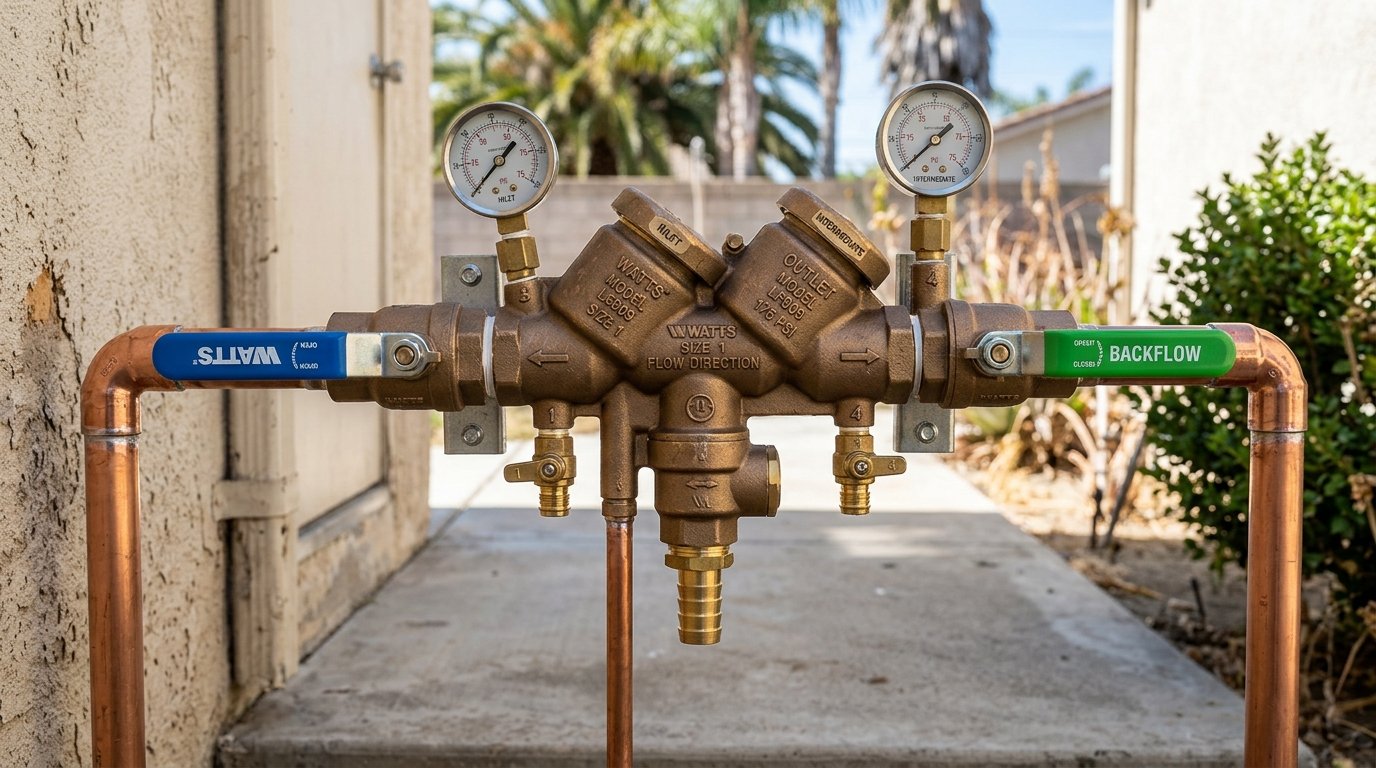
The Reduced Pressure Zone (RPZ) assembly (ASSE 1013) provides the highest mechanical protection against both backsiphonage and backpressure under high-hazard conditions (health-threatening contaminants). It features two independently acting check valves separated by a hydraulic differential relief chamber. If either check valve leaks or line pressure fluctuates dangerously, the relief valve dumps water to open air. RPZs must be mounted above grade with 12 inches minimum clearance and can never be installed in underground pits subject to flooding.
2. Double Check Valve Assembly (DCVA) — Low Hazard
A Double Check Valve Assembly (DCVA) (ASSE 1015) features two spring-loaded check valves within a sealed body with four test cocks. Because it has no atmospheric relief port, it is approved strictly for non-health hazard applications (substances that alter taste, color, or odor without posing toxicity). DCVAs can be installed in subterranean utility vaults with adequate drainage.
3. Pressure Vacuum Breaker (PVB) — Backsiphonage Only
A Pressure Vacuum Breaker (PVB) (ASSE 1020) contains an internal check valve and an atmospheric air inlet that opens when line pressure drops to 1.0 PSI above atmosphere. PVBs protect strictly against backsiphonage and cannot withstand backpressure. Under CPC § 603.5.4, a PVB must be installed at least 12 inches higher than the highest downstream outlet, making it unsuitable for steep hillside landscapes.
4. Spill-Resistant Vacuum Breaker (SVB) — Indoor Use
A Spill-Resistant Vacuum Breaker (SVB) (ASSE 1056) operates similarly to a PVB but incorporates an internal poppet seal that prevents water spitting upon pressurization, making it suitable for indoor mechanical closets and medical cabinets.
Backflow Assembly Comparison Guide
| Assembly Type | Hazard Level | Hydraulic Protection | Atmospheric Vent? | Pit / Vault Approved? | Testing Frequency |
|---|---|---|---|---|---|
| Reduced Pressure (RP / RPZ) | High Hazard (Toxic / Health) | Backpressure & Backsiphonage | Yes (Differential Relief) | No (Above Grade Only) | Annual Mandatory (LADWP) |
| Double Check (DCVA) | Low Hazard (Non-Health) | Backpressure & Backsiphonage | No (Sealed Body) | Yes (With Drainage) | Annual Mandatory (LADWP) |
| Pressure Vacuum Breaker (PVB) | Low / High Hazard | Backsiphonage Only | Yes (Air Inlet Bonnet) | No (12" Above Highest Head) | Annual Mandatory (LADWP) |
| Spill-Resistant Breaker (SVB) | Low / High Hazard | Backsiphonage Only | Yes (Spill-Proof Poppet) | No (Indoor Elevated Only) | Annual Mandatory (LADWP) |
How Much Does Backflow Testing & Repair Cost in Los Angeles? (2026 Pricing)
Compliance costs depend on assembly size, location accessibility, whether internal rebuilds are needed, and whether urgent same-day portal filing is required to stop an imminent shutoff:
| Backflow Service Description | Typical Cost Range | Scope of Work & Inclusions |
|---|---|---|
| Standard Residential Test (1/2" – 2") | $75 – $175 | Physical 5-point differential gauge test, certified sign-off, weatherproof tag, direct digital filing with LADWP. |
| Commercial Multi-Device Rate (1/2" – 2") | $65 – $120 per unit | Volume rate for multi-tenant apartment complexes, shopping centers, and commercial business parks. |
| Large Commercial / Fire Line Device (2-1/2" – 10") | $175 – $350 | Testing of heavy-duty DCDA or RPDA assemblies with bypass meter verification and detector check recording. |
| Diagnostic Re-Test (After Repair) | $50 – $95 | Verification pressure test conducted after disassembling valve and installing internal OEM rubber kit. |
| Internal Valve Rebuild (Rubber Kit & Springs) | $180 – $480 | Disassembly, chemical descaling, replacement of Check 1/Check 2 discs, springs, O-rings, and relief diaphragm. |
| Complete Assembly Replacement (1/2" – 2") | $950 – $2,800+ | Complete replacement with lead-free brass unit (Watts/Febco/Wilkins), brass ball valves, permit filing, and initial test. |
| Lockable Steel Security Enclosure Cage | $450 – $1,200 | Heavy-duty expanded steel security cage, concrete slab anchors, and shrouded puck padlock installation. |
Common Causes of a Failed Backflow Test
In Southern California, backflow assemblies endure harsh environmental conditions—intense sun and mineral-laden tap water carrying 12 to 22 grains per gallon of hardness (detailed in our San Fernando Valley Water Hardness Guide). The most common causes of test failure include:
- Mineral Scale on Check Seats: Calcite crystal buildup prevents the flat EPDM rubber check disc from sealing tightly against the bronze seat.
- Torn Relief Valve Diaphragm: High pressure spikes fatigue the flexible rolling rubber diaphragm in RPZ units, causing persistent water weeping from the relief port.
- Fatigued Springs: Over years of continuous compression, stainless steel check springs lose tension and fail to maintain the mandatory 5.0 PSID closure rating.
- Weeping Shut-Off Ball Valves: A leaking shut-off valve prevents technicians from isolating the assembly to measure static zero-flow pressure differentials.
The Scientific 5-Point LADWP Testing Protocol
Certified backflow testing requires a specialized NIST-traceable, calibrated differential pressure gauge (such as a Mid-West Instrument Model 830). Our certified master technicians execute the following field procedure:
- Pre-Inspection Verification: The technician records the manufacturer make, model, size, and serial number, verifying LADWP database records and checking for minimum 12-inch ground clearance.
- Flushing Test Cocks: Test cocks #1 through #4 are purged to blow out rust, sand, and pipe sediment before attaching sensitive test hoses.
- Isolating Downstream Service: Shut-off valve #2 is closed to establish static pressure conditions.
- Testing Check Valve #1: Differential hoses measure the pressure drop across Check Valve #1. The valve must hold tight at a minimum of 5.0 PSID to pass.
- Testing Differential Relief Valve: The technician slowly bleeds high-side pressure. The relief valve must open and vent water before the differential drops below 2.0 PSID.
- Testing Check Valve #2: Check Valve #2 is subjected to backpressure from the downstream side and must hold 100% watertight against leakage into the intermediate chamber.
- Certification & Tagging: Downstream water is restored slowly to prevent water hammer shock, and a tamper-resistant certification tag is affixed to the bronze body stamped with the test date and technician registration number.
How Technicians Rebuild a Failed Assembly On-Site
When an assembly fails due to worn rubber discs or mineral scale, our mobile service units carry complete OEM rebuild kits for all major brands (Watts, Zurn Wilkins, Febco, Ames, Apollo). The on-site rebuild involves:
- Depressurizing the Unit: Closing isolation valves and opening test cocks to drain the intermediate zone.
- Disassembly & Spring Containment: Safely unbolting the heavy bronze top cap while containing preloaded internal check springs.
- Seat Polishing & Descaling: Inspecting bronze valve seats for wire-drawing erosion and polishing away hard water scale with non-abrasive pads.
- Elastomer Replacement: Installing new chlorine-resistant fluoroelastomer discs, stainless check springs, and dynamic O-rings lubricated with food-grade silicone grease (NSF-61 certified).
- Relief Diaphragm Servicing: Replacing the flexible fabric diaphragm and piston seals within the differential relief valve.
- Immediate Re-Certification: Reassembling, slowly repressurizing, and running a complete 5-point differential gauge test to verify full compliance before leaving the site.
What Happens If You Ignore an LADWP Backflow Notice?
Ignoring an LADWP backflow notice triggers a progressive enforcement timetable under LADWP Rule 16-D:
- Initial Notice (Day 0): Mailed 30 to 45 days before the annual compliance anniversary date.
- Delinquency Warning (Day 30): Warns of pending water disconnection if certified test results are not submitted.
- Final 15-Day Disconnection Notice (Day 45): Direct property delivery warning of imminent water service shutoff and administrative fees.
- Physical Meter Lockout (Day 60): LADWP crews padlock the meter curb stop, terminating municipal water. Service is restored only after an authorized tester completes the test, uploads passing paperwork, and all delinquency penalties are paid. Commercial businesses and restaurants face immediate closure by the Los Angeles County Department of Public Health during any water shutoff.
Electronic LADWP Submission & Preventative Protection
Today, backflow compliance is handled entirely through digital portals. When SoCal Plumbing 247 completes your test, our technician immediately uploads test readings into the LADWP Cross-Connection Online Portal, issuing a digital confirmation receipt and emailing you an archival PDF certificate.
To safeguard your outdoor assembly against local risks, we recommend two essential measures:
- Lockable Security Cages: Prevent scrap metal theft by enclosing bronze assemblies in heavy-duty expanded steel or marine-grade aluminum security cages anchored to concrete footings with tamper-resistant puck locks.
- Insulation Blankets: In San Fernando Valley foothill neighborhoods prone to overnight winter freezes, wrap outdoor valves in weather-resistant R-13 insulation to prevent bronze body freeze cracks.
Why Trust SoCal Plumbing 247 for Certified Backflow Services?
Under state and county codes, backflow testing must be performed by certified testers registered with the Los Angeles County Department of Public Health using NIST-calibrated gauges. At SoCal Plumbing 247 (CSLB CA C-36), our master technicians provide fast, reliable backflow services across Greater Los Angeles:
- First-Visit Passing Guarantee: Our fully stocked trucks carry genuine OEM rebuild kits so minor check valve seal failures can be repaired and retested in the same trip.
- Same-Day LADWP Portal Filing: We handle all administrative paperwork and upload passing certificates directly to LADWP within 24 hours.
- Transparent Upfront Rates: No surprise fees, no hidden travel surcharges, and clear upfront pricing.
Received an LADWP Annual Backflow Notice?
Avoid shutoff penalties and service disruption. Schedule your certified annual backflow inspection with our licensed master technicians today.
Frequently Asked Questions: Los Angeles Backflow Testing
How much does annual backflow testing cost in Los Angeles?
Annual certified backflow testing in Los Angeles ranges from $75 to $175 for standard residential and light commercial assemblies (1/2" to 2"). Large commercial and fire line assemblies (2-1/2" to 8") range from $175 to $350. Pricing includes 5-point differential gauge testing, certified tester sign-off, weatherproof tagging, and direct electronic filing with LADWP.
Why did I receive an annual backflow testing notice from LADWP?
LADWP automatically issues annual compliance notices to properties with actual or potential cross-connection hazards under California Title 17 and LADWP Rule 16-D. Common triggers include landscape irrigation systems, pool auto-fill lines, fire suppression systems, multi-family submetering, or commercial operations like restaurants and medical offices.
Can a landscaper or handyman test my backflow assembly?
No. California health codes and LADWP rules mandate that testing must be completed by an AWWA or ABPA certified tester registered with the Los Angeles County Department of Public Health using an annually calibrated NIST differential gauge under a licensed C-36 plumbing contractor. Non-certified tests are rejected by LADWP.
What happens if my backflow preventer fails the annual test?
A test failure does not require replacing the entire assembly. Our certified technicians carry OEM internal rebuild kits on our trucks. We disassemble check valves, clean mineral scale, replace rubber discs and stainless springs ($180–$480), and re-test immediately on-site to achieve a passing certification without extra travel charges.
What is the difference between an RPZ and a Double Check (DCVA) assembly?
An RPZ assembly has two check valves plus an atmospheric relief valve that vents water if pressure drops, providing high-hazard protection against toxic contaminants. A DCVA has two check valves in a sealed body without an atmospheric vent and is approved only for non-toxic hazards. RPZs must be mounted above grade; DCVAs can be installed in underground vaults.
How can I protect my outdoor backflow preventer from theft in Los Angeles?
Because backflow assemblies contain valuable scrap bronze and brass, install a lockable, heavy-duty expanded steel security cage anchored into a concrete footing with expanding wedge bolts and secured by a shrouded puck padlock that cannot be cut with bolt cutters or pry bars.
How long do I have to submit my backflow test report to LADWP?
LADWP notices provide a 30 to 45-day window from the date of the compliance letter. If unsubmitted by day 45, delinquency notices and disconnect warnings follow. SoCal Plumbing 247 uploads test certificates directly to the LADWP digital portal within 24 hours of inspection.
Don't Risk Water Service Disconnection
LADWP compliance deadlines are strictly enforced. If you have an active notice due within the next 30 days, contact our certified backflow testing team today to schedule an inspection and immediate digital certificate filing.