
Tankless water heaters have become the gold standard in Los Angeles, Woodland Hills, and Encino homes. Units from top manufacturers like Navien, Rinnai, Noritz, and Rheem deliver continuous hot water, take up virtually zero garage square footage, and boast thermal efficiencies exceeding 95%. However, they have one notorious vulnerability: Southern California's extremely hard tap water.
Because tankless systems heat water on demand by forcing it through tightly wound, narrow copper or stainless steel heat exchanger passages, high heat causes dissolved minerals to precipitate out instantly. Without regular descaling, this mineral scale forms an insulating crust that ruins thermal transfer, chokes water flow, and voids your equipment warranty.
Why Los Angeles Tap Water Demands Frequent Descaling
According to annual water quality data published by the Los Angeles Department of Water and Power (LADWP) and the Metropolitan Water District (MWD), tap water across Greater Los Angeles and the San Fernando Valley averages between 12 and 22 grains per gallon (GPG), or roughly 200 to 380 parts per million (PPM) of dissolved calcium carbonate and magnesium. In our comprehensive San Fernando Valley Water Hardness Report, areas like Woodland Hills, Chatsworth, and Van Nuys frequently register among the hardest municipal supplies in the state.
In regions with soft water (under 3 GPG), manufacturers recommend flushing every two years. In Los Angeles, operating a tankless water heater for two years without descaling is almost guaranteed to cause severe heat exchanger choking and system shutdown.
5 Clear Signs Your Tankless Water Heater Needs Immediate Descaling
- Fluctuating Shower Temperatures ("Cold Water Sandwich"): Water starts hot, turns tepid or cold mid-shower, then slowly recovers. Mineral scale insulates thermal sensors, preventing rapid burner modulation.
- Reduced Hot Water Pressure: You notice strong pressure when running cold faucets, but showerheads and kitchen sprayers lose significant velocity when turned fully to hot.
- System Error Codes: Diagnostic codes appear on your digital controller (e.g., Navien E012 / E016 / E110, Rinnai Code 11 / 14, Noritz Code 11 / 90). These indicate flame failure, overheating, or inadequate exhaust flow caused by heat exchanger scale.
- Kettling or Popping Sounds: Popping, whistling, or rumbling noises emanate from the heat exchanger as trapped water boils under mineral deposits.
- Spiking Gas Bills: Because scale acts like an insulating blanket, the burners must fire longer and hotter to transfer heat through the crust to the water.
Step-by-Step: The Professional 45-Minute Descaling Procedure
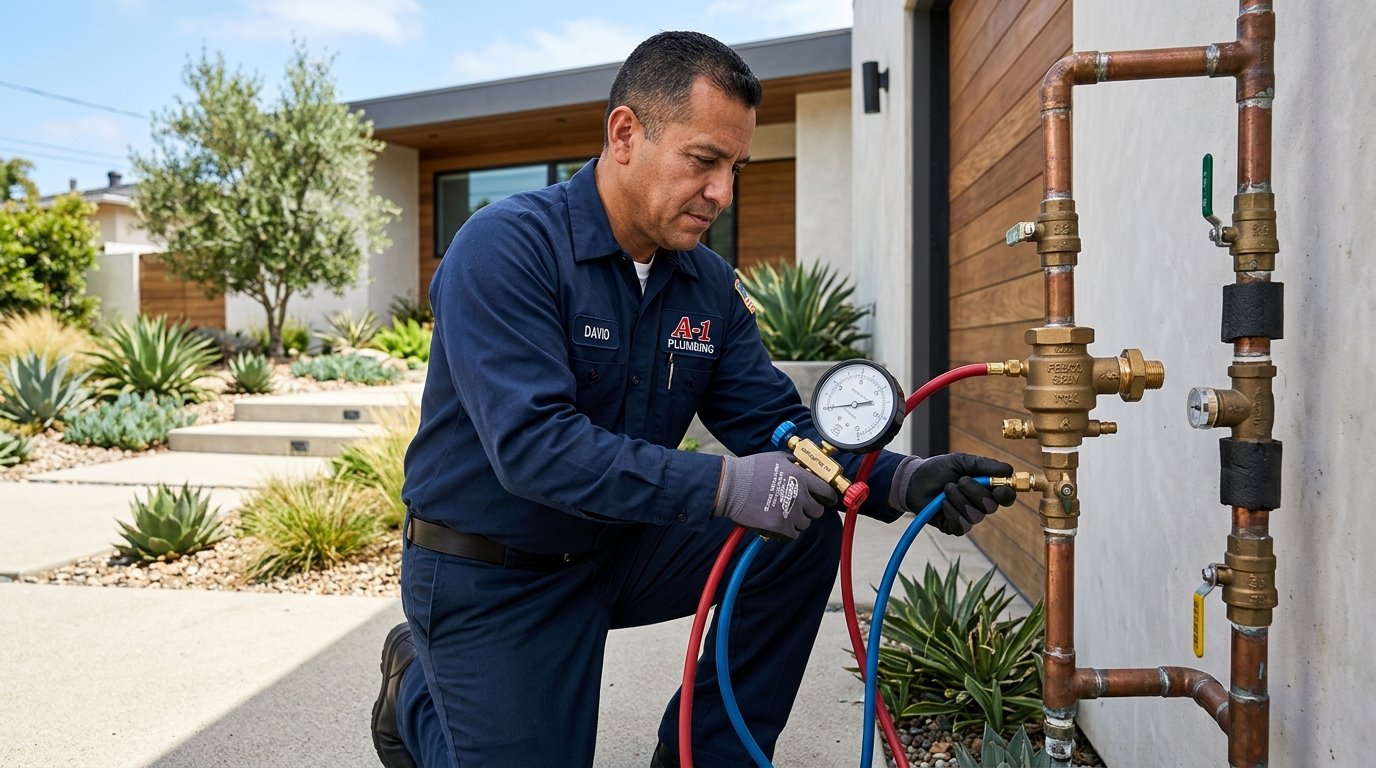
A proper flush requires isolating the water heater from your home's potable water network using dedicated service isolation valves:
- Step 1: Power & Gas Disconnection: Turn off the gas supply shutoff valve and unplug the water heater's electrical cord.
- Step 2: Isolate Domestic Plumbing: Close the blue cold water inlet isolation valve and the red hot water outlet isolation valve to prevent flush solution from entering household taps.
- Step 3: Connect Hoses to Service Ports: Connect the pump discharge hose to the cold service port and the return drain hose from the hot service port back into a 5-gallon bucket.
- Step 4: Circulation: Submerge the utility pump in 4 gallons of undiluted white vinegar (or NSF-certified citric acid descaler like Haymaker) and circulate for 45 to 60 minutes. The solution will gradually turn foamy and cloudy blue-green as copper carbonate dissolves.
- Step 5: Fresh Water Flush & Screen Cleaning: Close the service valves, open cold supply to purge lines with fresh water for 3 to 5 minutes, and unscrew the cold water inlet filter screen to rinse out trapped gravel and sand.
Protecting Your Tankless Investment with Water Softening
If you prefer not to perform bi-annual descaling flushes, installing an ion-exchange water softener or catalytic scale conditioner upstream completely halts mineral buildup before it enters the heat exchanger. Learn the differences in our guide to Salt vs. Salt-Free Water Softeners.
Cost & Comparison Summary
| Descaling Approach | Typical Cost | Recommended Interval in LA | Key Advantages |
|---|---|---|---|
| DIY Vinegar Flush Kit | $75 – $120 (One-time kit purchase) | Every 6 Months | Affordable ongoing maintenance; reusable pump, hoses, and bucket. |
| Professional C-36 Technician Flush | $150 – $250 per visit | Every 6 – 12 Months | Includes inlet screen cleaning, electronic combustion diagnostics, and warranty documentation. |
| Upstream Water Softener Addition | $1,800 – $3,200 (Installed) | Extends flush interval to 12–18 mo | Eliminates 95%+ of mineral scale throughout all household plumbing and appliances. |
Why Trust SoCal Plumbing 247 for Your Los Angeles Home?
At SoCal Plumbing 247 (CSLB CA C-36), our team brings over 20 years of dedicated master trade expertise to homes throughout Greater Los Angeles and the San Fernando Valley. Whether dealing with stubborn slab leaks, complex gas repiping, municipal sewer laterals, or high-efficiency water heating, we provide upfront flat-rate pricing, zero overtime charges, and fully guaranteed workmanship.
Frequently Asked Questions
How often should a tankless water heater be descaled in Los Angeles?
In Los Angeles, where tap water averages 12 to 22 grains per gallon (GPG) of mineral hardness, a tankless water heater should be flushed and descaled every 6 to 12 months. If your home has a whole-house water softener installed upstream, an annual 12-month flush is sufficient. Homes without water softeners require descaling every 6 months to prevent heat exchanger scale buildup and maintain manufacturer warranties.
What happens if you never descale a tankless water heater?
Failing to descale allows calcium and magnesium mineral scale to bake onto the copper or stainless steel heat exchanger tubes. This narrows water channels, reduces heat transfer efficiency, spikes gas utility bills, triggers error codes (such as Navien E012 or Rinnai Code 11), and will eventually crack the heat exchanger. Scale damage is explicitly excluded from manufacturer warranties.
Can I descale my tankless water heater with regular white vinegar?
Yes. Four gallons of undiluted virgin food-grade white vinegar (5% acidity) circulated through the isolation service valves with a small 1/6 HP submersible utility pump for 45 to 60 minutes effectively dissolves normal calcium carbonate scale without damaging internal o-rings.
How much does professional tankless water heater descaling cost in Los Angeles?
A professional tankless descaling service in Los Angeles typically costs between $150 and $250. This includes flushing with commercial-grade descaling solution (like Haymaker or Calci-Free), cleaning the cold water inlet debris screen filter, testing the igniter and flame sensor, and inspecting the condensate neutralizer.
Need Urgent On-Site Plumbing Help?
Our licensed C-36 technicians provide rapid 30- to 45-minute emergency mobile dispatch across Los Angeles and the San Fernando Valley with upfront flat-rate pricing.